Road casualty statistics from the Department for Transport reveal that road casualties in Oxfordshire reduced to the lowest levels on record in 2025. The total casualties and serious injuries on Oxfordshire roads were at their lowest levels recorded since the motor car become popular, and the downward trend in lower speed roads (20-30mph) is clear
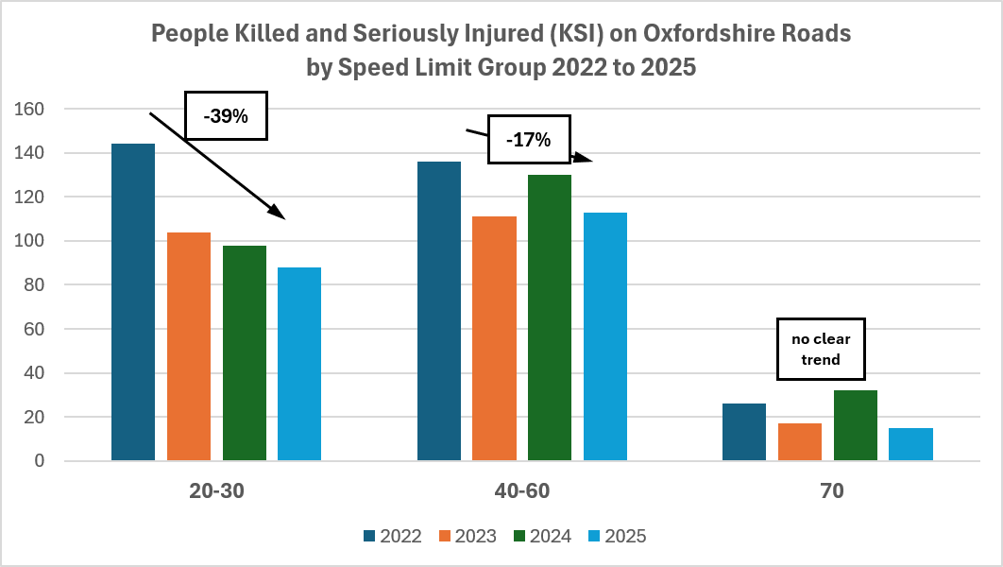
In total in 2025, 19 people were killed, the lowest number except the pandemic year of 2021. 216 were killed or seriously injured, the lowest on record for the key metric of the County Council’s Vision Zero programme.
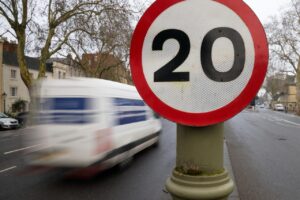
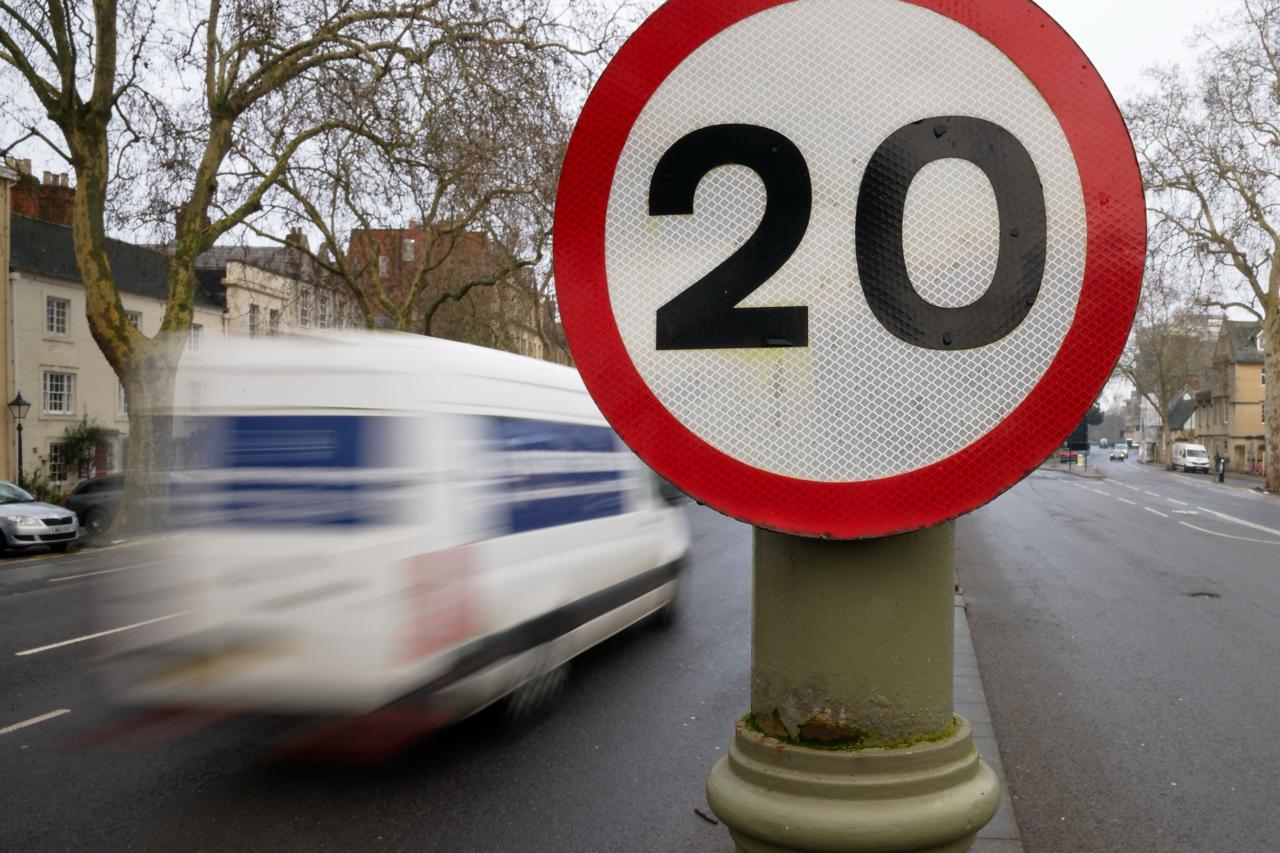
In 20 or 30 mph speed limits combined, the number of people killed or seriously injured (KSIs) reduced for the third year running, by 10%. Between 2022 and 2025 KSIs on these roads has fallen 39%, from 144 to 88. There were also reductions on higher speed roads, with 40-60mph road showing a 17% reduction since 2022. But for 40-60 mph and 70 mph roads, 2024 was a high casualty year and we await another year of data before calling a trend.
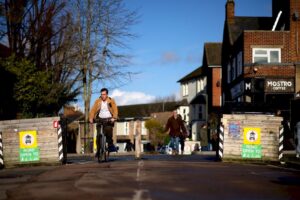
The reductions on 20 and 30mph roads point to the success of Oxfordshire County Council’s (OCC’s) 20mph speed limit programme in reducing serious casualties. The improvements algin to a recent independent report by Imperial College[1], which found that 20mph schemes reduce crashes by 26% and casualties by 23%, and even sign-only schemes reduce crashes by 22% and casualties by 11%. OCC’s approach is to roll-out a sign-only approach first, for impact and economy, and follow this with other speed management interventions where required.
Recent Low Traffic Neighbourhoods are also known to have reduced casualties by about 20 per year[2]. which valuating the safety and speed impacts of the 20mph speed limit in the UK: Evidence and insights.
No people cycling, and no bus, van or heavy good vehicle occupants were killed on Oxfordshire roads in 2025. Serious injuries and deaths to car and van occupant were down by 30%. Serious injuries to pedestrians were down, but more were killed[3], and there was a similar pattern for motorcyclists.
Each death or injury on the roads is a tragedy, and CoHSAT remains disappointed that 200 serious injuries and 20 deaths a year do not get the thorough incident reviews and responses that a train or aircraft crash would – perpetuating the cycle of suffering in the families affected. But the reducing toll shows that the efforts of campaigners and councils working to make our roads safer have a real benefit to people’s lives.
Robin Tucker, Co-Chair of CoHSAT said: “It’s clear that Oxfordshire’s 20mph zones are now saving dozens of serious injuries a year. These figures show progress which is really measured in the lives that are still with us and the lives that are not disrupted by crashes. In particular it shows that if you adopt a policy with known safety benefits like 20mph or Low Traffic Neighbourhoods and follow it through, it saves people from harm and shows through in the results.”
Hannah Kirby, CoHSAT’s other Co-Chair added “There is a strange blind spot in society, which academics have identified and called motonormativity, where they ignore the harm done by cars. One day we’ll look back in astonishment that our society considered the current level of injury, death and loss of independence due to road danger as acceptable for a single form of mobility.”
Ian Loader, Chair of Cyclox, said “Cyclox was very relieved to see that there were no cyclist fatalities in Oxfordshire last year for the first time in around 20 years. There has also been a long-term trend of declining serious injuries among cyclists. But even one death or serious injury is too many and we want the county council to continue to push towards Vision Zero, using levers such as reducing speed limits and improving cycling infrastructure. Increased enforcement of speed limits also plays a part in reducing deaths and serious injuries among all road users.”
Sushila Dhall, Chair of Oxford Pedestrians Association, said “We welcome the news that no pedestrians have been killed in Oxford simply for walking, but we are sorry to hear that being a pedestrian led to the deaths of 5 people in Oxfordshire towns. Lowering motor traffic speeds means people are alive today who would not be if driving speeds were faster. These statistics support our case for wider 20mph limits throughout Oxford as soon as possible.”
Siobhann Mansel-Pleydell, Managing Director of Oxfordshire Liveable Streets, said “This is great progress, but not every road user is benefiting equally from it. Car occupants are seeing real gains. Pedestrian deaths are still rising even as pedestrian injuries fall, and that’s exactly where 20mph and low traffic neighbourhoods are meant to make the biggest difference. Oxfordshire Liveable Streets is reading this data as proof of direction, not proof of arrival. Edinburgh and London have both recorded reductions in deaths and serious injuries of 20 to 34% where 20mph has been rolled out and adhered to. We want to see Oxfordshire go further and faster on 20mph, backed by proper enforcement, so the people most exposed on our roads, children, older residents, anyone without the protection of a car body, see the same gains as everyone else.”
CoHSAT and its 25 member groups[4] continue to campaign for further life and limb saving measures. The main causes of road deaths are well documented: 88% involved a car or van collision, most involve poor driver behaviour, excessive speed, distraction, impairment or a combination of these. Reducing these requires a combination of safer roads, lower speeds, and better driver behaviour – needing action from Oxfordshire County Council, Thames Valley Police and other partners.
Oxfordshire County Council’s Vision Zero programme aims to reduce people Killed and Seriously Injured on Oxfordshire roads by half by 2030. It has made some progress through targeted road and speed limit programmes. Reaching the target still needs a casualty reduction of 12% every year.
Note on the data.
These data are sourced from the Department of Transport’s Road Safety Statistics collection[5], final results released in late July 2026. We used the interactive Collision Analysis Tool (CAT), which allows download of customer data sets. There is also a mapping tool Mapping Application for Visualising Road Injury Casualties (MAVRIC) which allows visualisation of the location of casualties.
The data used is ‘unadjusted’ – which means it is consistent with Thames Valley Police reporting of actual incidents, and not adjusted for the different approaches to recording injury severity that different police forces use (‘adjusted’ is better for comparison between different police forces). We will later produce an analysis of ‘What killed or injured whom’.
20 and 30mph road casualties are combined to attempt to assess the impact of the roll-out of 20mph zones in Oxfordshire. However, in addition some roads have been converted from 40mph to 30mph and no adjustment has been made for this, so the benefit is likely to be greater.
[1] Evaluating the safety and speed impacts of the 20mph speed limit in the UK: Evidence and insights – ScienceDirect
[2] https://cohsat.org.uk/east-oxford-ltns-cut-casualties-on-boundary-roads/
[3] Four in market towns: Abingdon, Thame, Wantage, Woodstock and one in the village of Bladon.
[4] https://cohsat.org.uk/about-cohsat/
[5] https://www.gov.uk/government/collections/road-safety-statistics